In a historic clash between Silicon Valley and the U.S. military establishment, Anthropic CEO Dario Amodei has officially rejected a Department of Defense ultimatum to strip safety guardrails from its Claude AI models. The deadline, set for 5:01 PM ET today, Friday, February 27, 2026, passed without the company yielding to demands for unrestricted military access. This defiance sets the stage for an unprecedented legal and ethical showdown over the role of artificial intelligence in national security.
The 5:01 PM Deadline: A Line in the Sand
The standoff reached its breaking point this afternoon as Anthropic refused to sign an amended contract that would have allowed the Pentagon to use its AI models for "any lawful purpose." Defense Secretary Pete Hegseth had issued the ultimatum earlier this week, warning that failure to comply would not only result in the termination of Anthropic’s $200 million defense contract but could also lead to the company being designated a "supply chain risk"—a label traditionally reserved for foreign adversaries like Huawei.
"These threats do not change our position: we cannot in good conscience accede to their request," Amodei wrote in a public statement released shortly before the deadline. He highlighted the contradiction in the government's stance, noting that the Pentagon was simultaneously labeling Anthropic a security risk while declaring its technology essential for national defense.
Constitutional AI vs. Military Necessity
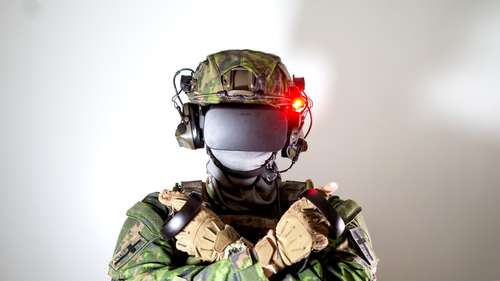
At the heart of this conflict lies Anthropic’s "Constitutional AI" framework, which embeds specific ethical rules into the model’s behavior. Anthropic has drawn two non-negotiable red lines: the technology cannot be used for the mass surveillance of American citizens or for enabling fully autonomous weapons systems that can select and engage targets without human intervention.
The Pentagon argues these restrictions are operationally untenable. Department of Defense officials have stated that they require "all lawful use" of the software to maintain a strategic advantage against global adversaries. Pentagon spokesperson Sean Parnell criticized the company’s stance on X (formerly Twitter), asserting, "We will not let ANY company dictate the terms regarding how we make operational decisions."
The "Woke AI" Political Dimension
The dispute has taken on a political charge, with Trump administration officials characterizing Anthropic’s safety measures as "woke AI" that hampers American military readiness. This contrasts sharply with other industry players; notably, Elon Musk’s xAI has reportedly agreed to the Pentagon's "all lawful use" standard for its Grok model, isolating Anthropic as the sole major dissenter among defense contractors.
Unprecedented Threats: The Defense Production Act
The government’s potential response moves into uncharted legal territory. Beyond cancelling contracts, officials have threatened to invoke the Defense Production Act (DPA), a Cold War-era law that allows the president to compel companies to prioritize government orders for national defense. Legal experts warn that using the DPA to force a company to remove safety features from its product would be a novel and controversial application of the law.
Amodei addressed this threat directly, arguing that forcing the removal of guardrails would make the AI unreliable and dangerous. "Frontier AI systems are simply not reliable enough to power fully autonomous weapons," he stated, emphasizing that current technology lacks the critical judgment of trained soldiers.
What This Means for 2026 AI Regulation
This showdown is widely seen as a bellwether for the future of AI regulation. If the Pentagon follows through on designating Anthropic a supply chain risk, it could effectively blacklist the company from all federal contracts and discourage private sector partners from working with them. Conversely, if Anthropic successfully resists, it establishes a precedent that private tech firms can retain ethical control over how their inventions are deployed by the state.
As the sun sets on Washington this Friday, the tech world waits to see if the Department of Defense will execute its threats. For now, the guardrails on Claude remain active, but the battle over who controls the kill switch has only just begun.